Hemorrhoids: Symptoms, Causes and Treatment Options
What are hemorrhoids?
Hemorrhoids, also called piles, are swollen blood vessels in the lower rectum or around the anus, the opening where stool leaves the body. Internal hemorrhoids form inside the rectum, while external hemorrhoids form under the skin around the anus. Many cases are mild and improve with home care, but rectal bleeding should always be checked by a doctor.

Treatment options for hemorrhoids
Most hemorrhoids improve with more fiber, enough fluids, and less straining. When home care does not help, office treatments such as rubber band ligation can treat internal hemorrhoids, and surgery may suit large external hemorrhoids. Hemorrhoid embolization is a nonsurgical option for selected patients with ongoing internal hemorrhoid bleeding.
Hemorrhoids FAQs
-
Internal hemorrhoids form inside the lower rectum, while external hemorrhoids form under the skin around the anus. Internal hemorrhoids often cause painless bleeding, while external hemorrhoids may itch, swell or hurt. An internal hemorrhoid can also slip out through the anal opening, called prolapse, so a lump outside the anus is not always an external hemorrhoid.
-
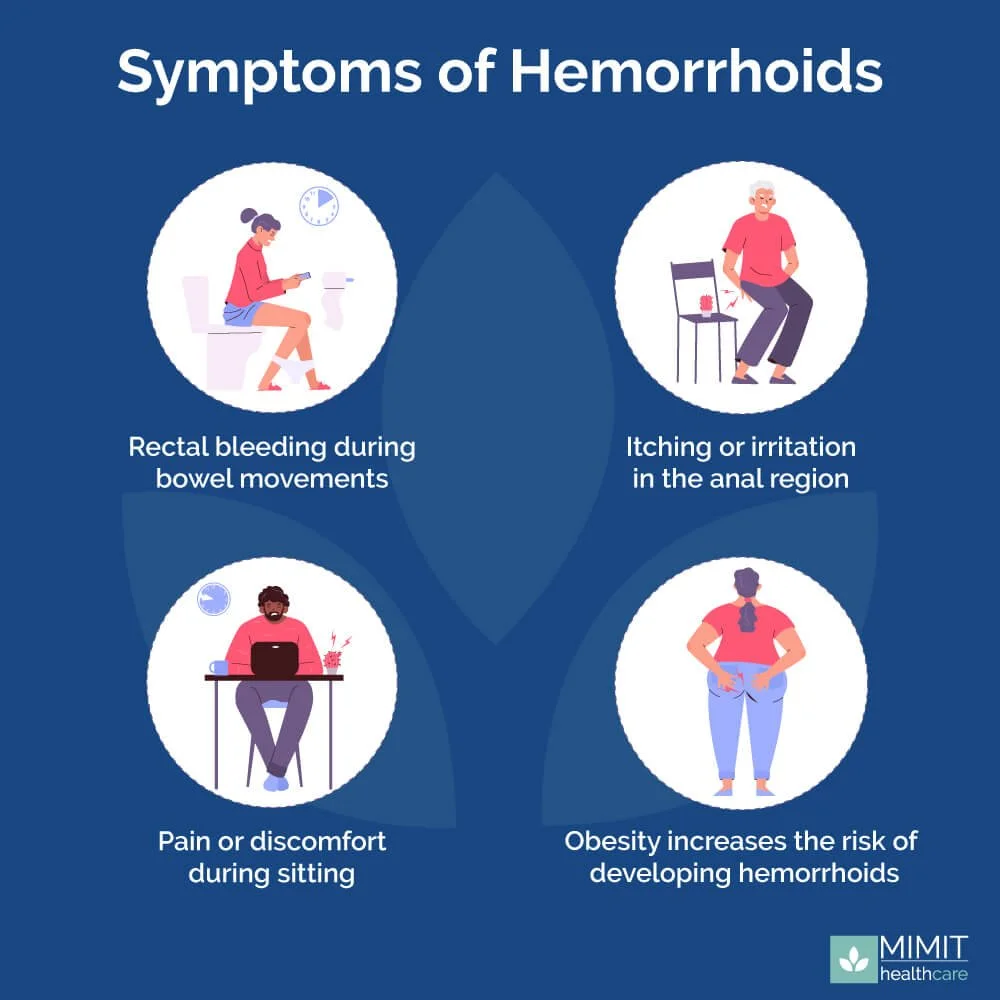
Internal hemorrhoids can cause bright red bleeding during or after a bowel movement without causing pain. Blood may appear on toilet paper, on the stool or in the toilet bowl. Other symptoms can include itching, swelling or a lump near the anus. Painless bleeding still needs a doctor's check, because symptoms alone cannot confirm where the blood is coming from.
-
A suddenly painful lump near the anus can be a thrombosed hemorrhoid, which means a blood clot has formed inside the swollen tissue. This type of clot stays in place and does not travel to other parts of the body. Get prompt medical care for a new, very painful lump, and urgent care if the pain worsens or comes with fever or discharge.
-
Extra pressure from straining, constipation or long toilet visits is a common reason hemorrhoids develop. Pregnancy, getting older, frequent heavy lifting and a low-fiber diet can also raise the chance of hemorrhoids. Symptoms may keep returning if constipation, diarrhea or toilet habits keep putting pressure on the area.
-
Bleeding hemorrhoids should be checked by a doctor, because rectal bleeding can have other causes, including small tears, bowel inflammation or colon cancer. Ask whether you are due for colon cancer screening, but do not wait for a routine screening to have bleeding checked. Get urgent care for heavy or nonstop bleeding, and call 911 for bleeding with fainting or confusion.
-
Doctors diagnose hemorrhoids by asking about your symptoms and examining the anal area. A gloved-finger rectal exam and an anoscopy, a short-tube exam of the anal canal, help check for internal hemorrhoids. A colonoscopy, a camera exam of the colon, may be needed when bleeding is unexplained or continues, or when other bowel symptoms need checking.
-
Mild hemorrhoids often improve with more fiber, enough fluids, less straining and shorter toilet visits. Some symptoms settle within days, but timing varies and symptoms can return. If home care does not help, get checked rather than treating yourself for weeks. For more detail, read our guide on how long hemorrhoids take to go away.
-
See a hemorrhoid doctor about a procedure when bleeding, discomfort or tissue that sticks out continues despite changes in bowel habits and other basic care. The right option depends on whether your hemorrhoids are internal, external or both, and which symptoms bother you most. MIMIT Health sees patients with ongoing internal hemorrhoid bleeding in Des Plaines, Hinsdale, Chicago South Loop and Chicago North.